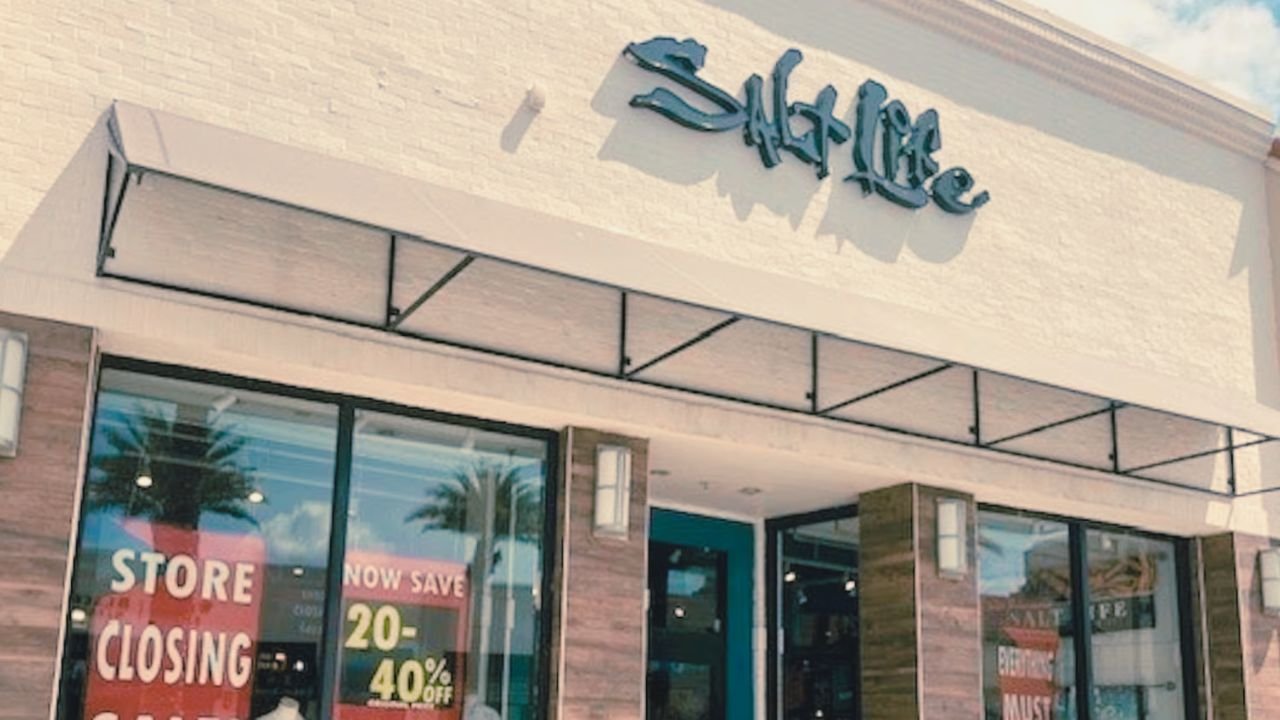

If you heard that Salt Life stores are closing and assumed the brand was finished, you’re not alone. But the real story is more specific than a simple shutdown. The stores are closing — that part is true. The brand itself, however, is still alive under new ownership.
This article breaks down exactly what happened: why the parent company filed for bankruptcy, who bought Salt Life, what shoppers experienced during the closures, and what the brand looks like going forward.
Salt Life Stores Are Closing, But the Brand Is Not Gone
Let’s answer the main question directly. Salt Life is not disappearing entirely. The retail storefronts are closing, but the brand was sold through a bankruptcy process and is expected to continue through e-commerce and wholesale channels.
That distinction matters. A brand shutting down means the name is gone, products stop, and the company ceases to exist. That is not what happened here. What happened is that the physical store model ended, while the brand itself found a new owner.
For shoppers, this means Salt Life products may still be available — just not in standalone branded stores. For employees who worked in those locations, the closures meant real job losses. For anyone following the brand, the key takeaway is that store closures and brand extinction are two very different outcomes.
What Led to the Bankruptcy Filing
To understand the closures, you need to know who owned Salt Life before all of this happened. Salt Life was owned by Delta Apparel, a publicly traded clothing company. On June 30, 2024, Delta Apparel filed for Chapter 11 bankruptcy in Delaware.
The reasons weren’t one single failure. According to reporting from WWD, a combination of weak consumer demand and higher cotton costs put serious financial pressure on the company. These are industry-wide issues that hit multiple apparel brands during the same period, not problems unique to Salt Life alone.
Before any sale was finalized, Delta Apparel issued a warning to regulators about the possibility of layoffs and store closures if no buyer could be found. This kind of notice — sometimes called a WARN notice — is legally required when large-scale layoffs are expected. It signals that a company is in serious trouble and preparing for a difficult outcome.
The company was not simply mismanaged into the ground. It faced a mix of cost pressures, soft demand, and financial strain that made continuing the current business model unsustainable.
Who Bought Salt Life and What They Paid
The bankruptcy process led to a court-supervised auction of Salt Life’s brand assets. The winning bid came from Iconix International and Hilco Consumer-Retail Group, who together paid approximately $38.74 million for the brand.
It’s important to be clear about what that purchase actually included. The buyers acquired the brand name, logo, and related intellectual property — not the store leases, not the full workforce, and not the entire retail operation. This is a common structure in bankruptcy asset sales.
Think of it this way: the house was sold, but the new owner plans to use it differently. The Salt Life name and identity transferred to Iconix and Hilco, but the model those assets operate under is changing significantly.
Iconix, in particular, is known as a brand management company. Its business model typically involves acquiring brand names and licensing them to manufacturers and retailers, rather than running physical stores directly. That tells you a lot about the direction Salt Life is likely heading.
The 28 Store Closures — What Shoppers Experienced
Once the sale was completed, the operational side of the wind-down moved quickly. All 28 Salt Life retail stores across 10 states began liquidation in September 2024.
Shoppers who visited stores during this period saw signs advertising discounts. According to USA Today, those discounts reached up to 40% off. This was a liquidation sale — a standard way for a closing retailer to clear out inventory before the doors shut permanently. It is not a long-term sale strategy. The goal is simply to move merchandise before the lease ends.
For customers who had outstanding gift cards or pending returns, there was a window of time after the store-closing announcement during which those were still honored. That window was limited, so anyone who waited too long may have lost that opportunity.
If you drove past a Salt Life store during this period and saw big discount signs, that was the end of the retail chapter — not a special promotion or a sign the business was recovering.
What Happens to Salt Life as a Brand From Here
Under Iconix and Hilco, Salt Life is expected to operate primarily as a licensed brand. That means the name gets attached to products sold through other retailers and online platforms, rather than through Salt Life’s own brick-and-mortar stores.
This is a well-established model in retail. When a brand manager like Iconix acquires a name out of bankruptcy, they typically keep the brand identity alive by licensing it to manufacturers who sell through department stores, outdoor retailers, or e-commerce platforms. The storefront model disappears, but the products keep moving.
Retail Dive specifically noted the expected pivot to e-commerce and wholesale for Salt Life. That means shoppers who want Salt Life gear in the future will likely need to look online or through retail partners — not a standalone Salt Life store.
This mirrors a broader pattern in retail. Brands under financial stress frequently shed their physical locations to cut overhead while keeping the name alive through licensing. It’s not a glamorous outcome, but it is a practical one. The brand survives. The expensive store model does not.
If you’re tracking similar stories in retail and want straightforward breakdowns of what business events like bankruptcies and brand acquisitions actually mean, Honest Business Tips covers these topics in plain language.
What This Means If You’re a Shopper, Employee, or Business Follower
If you’re a shopper: The standalone Salt Life stores are gone. But the brand is likely to appear online and through wholesale retailers going forward. Watch for Salt Life products through e-commerce channels or outdoor and lifestyle retail partners.
If you were an employee: The store closures were real and resulted in job losses. Delta Apparel’s WARN filing ahead of the sale signaled this was coming. Unfortunately, when brand assets are sold out of bankruptcy without the store operations, the retail workforce typically does not transfer to the new owner.
If you’re following this as a business story: This is a useful case study in how brands navigate bankruptcy. The name survives when there’s value in it. The business model that failed — in this case, standalone retail stores in a tough consumer environment — gets replaced with something leaner. It’s not a resurrection. It’s a restructuring of what the brand actually is.
The Bottom Line
Salt Life is not out of business in the way most people mean when they ask that question. Its 28 retail stores closed. Its parent company, Delta Apparel, went through Chapter 11 bankruptcy. But the brand itself was purchased for nearly $39 million by Iconix International and Hilco Consumer-Retail Group, and it is expected to continue in a different format.
The story here isn’t about a brand dying. It’s about a retail model failing and a brand being reborn under new ownership with a completely different strategy. Whether Iconix and Hilco can make Salt Life work as a licensed and e-commerce brand remains to be seen. But as of now, the name isn’t gone — just the stores.